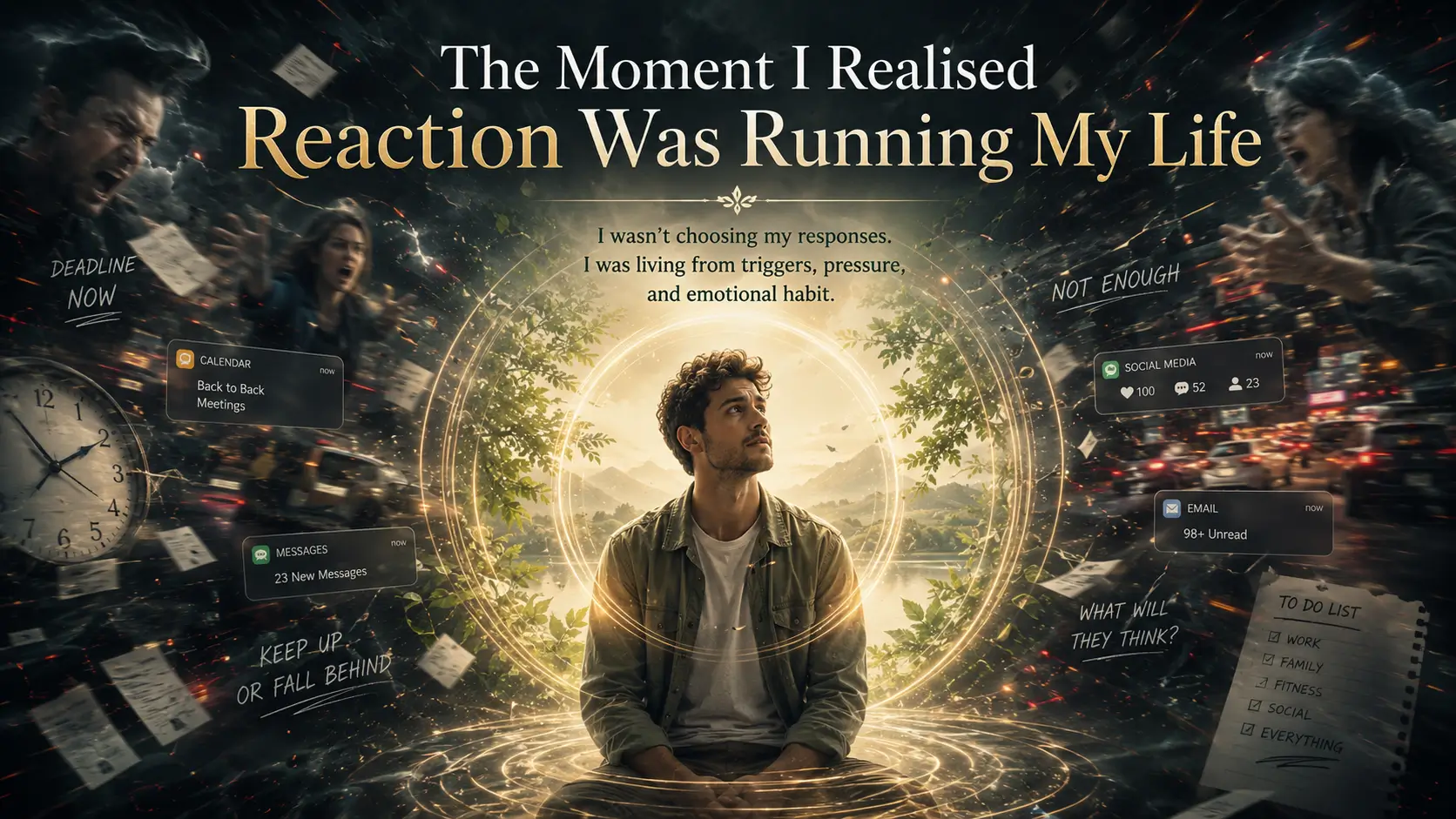
Chaos appears everywhere we look.
It lives in the media.
At the workplace.
At the grocery store.
In conversations.
In expectations.
In noise.
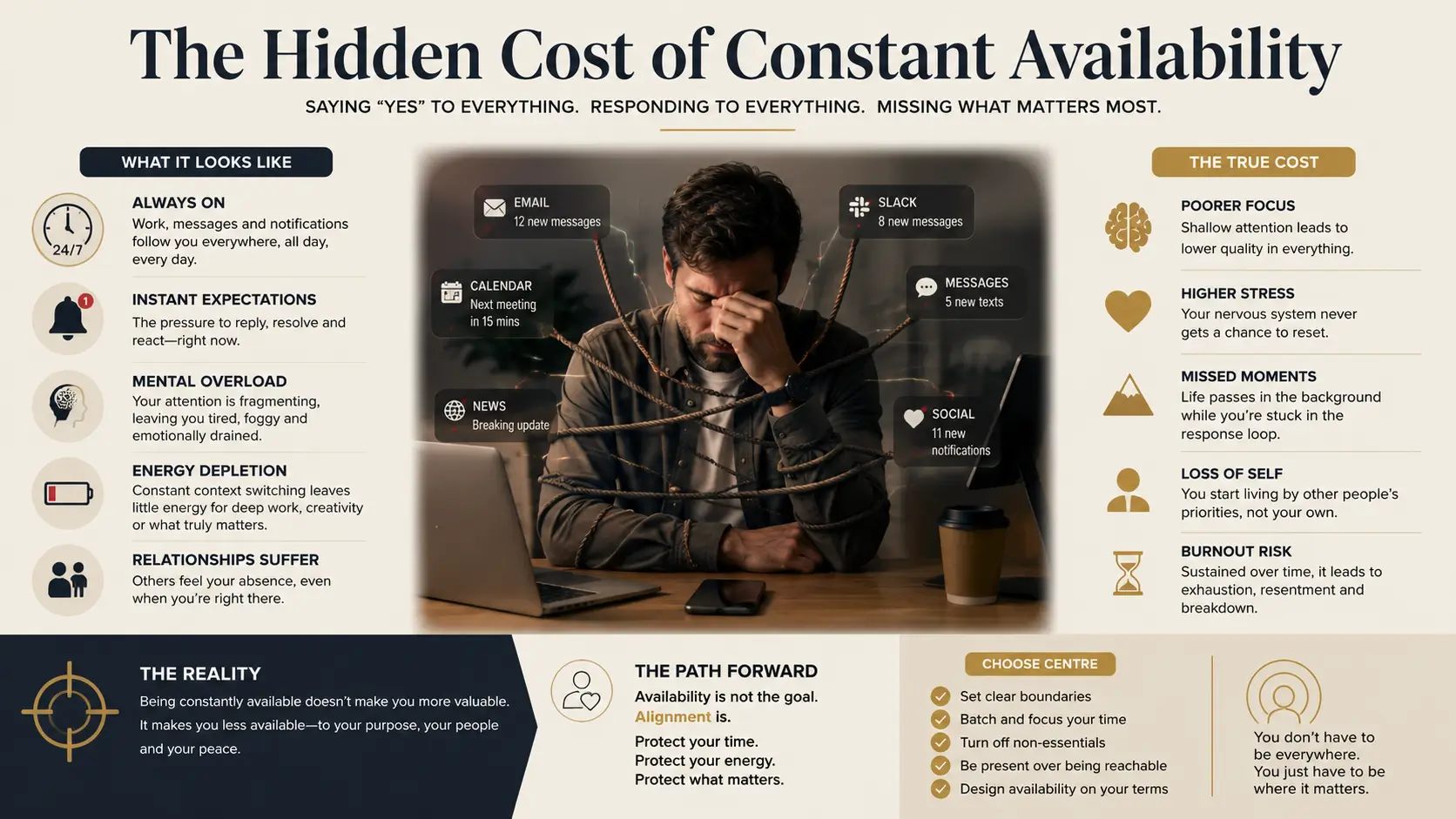
No matter where we go, there always seems to be something demanding our attention, our emotion, our reaction or our energy.
And slowly, without realising it, urgency begins living inside the mind.
A feeling that says:
I must do something.
I must decide immediately.
I cannot stop.
I cannot sit still long enough to think.
But perhaps one of the greatest things we have lost is the ability to pause before accepting or rejecting information.
Everything arrives demanding instant reaction.
Opinions.
Pressure.
Fear.
Opportunities.
Change.
And because we carry lived experiences within us, we often believe we already know what is right and wrong. So the mind begins overanalysing at an alarming rate, trying to protect us from making the wrong move.
Take something as simple — and as life-changing — as moving location.
Do I stay where I am?
Or do I leave?
On the surface, it seems like a practical decision.
But underneath, it becomes emotional.
Moving takes courage.
It pulls us away from familiarity and comfort. It asks us to leave behind routines, people, memories and identities we have grown attached to.
Even when we know deep inside that change may lead us closer to what we truly want, hesitation appears.
And hesitation is powerful.
Because within a single moment of hesitation, an opportunity can be won or lost.
That is the tension many people live with every day.
Not because they cannot make decisions.
But because acting on those decisions feels far more difficult than understanding them.
The truth is, most people already know what their heart is trying to tell them.
The challenge is trusting it enough to move.
We ask ourselves:
What is the price of happiness?
Is it worth the risk?
Am I missing something important?
Is this a purpose… or a problem?
These questions can either guide us toward clarity or trap us inside endless mental loops.
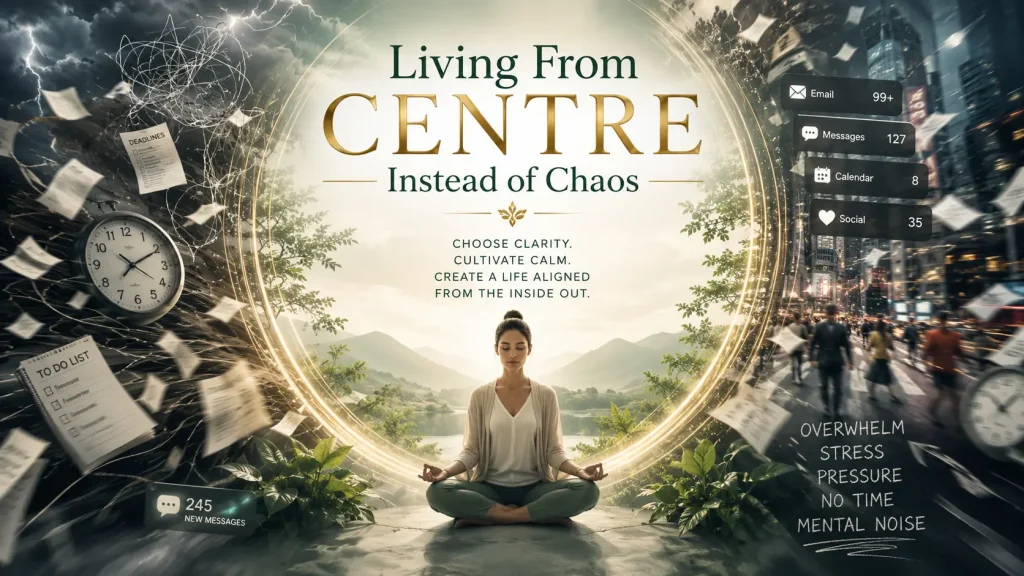
The Centre Method is not about removing chaos from the world.
Chaos will always exist.
The goal is learning how to remain centred while chaos moves around us.
To observe without immediately reacting.
To think without spiralling.
To choose without fear controlling the outcome.
Living from centre means creating enough inner stillness to hear your own direction clearly.
Not the media’s direction.
Not society’s urgency.
Not everyone else’s expectations.
Your own.
Because when a person becomes centred, decisions become clearer.
And eventually they realise something important:
Decisions are often easy.
Acting on them is the real challenge.
Yet action is where life changes.
Not in thought.
Not in hesitation.
But in movement.
And sometimes the first step toward a better life begins with nothing more than a quiet moment of honesty with yourself.