There was a moment that changed the way I began to look at my life.
Not through some dramatic event.
Not through a crisis.
But through something very ordinary.
I was on my way to my workshop one morning with a clear intention of what I needed to accomplish that day. My mind was focused, my direction was set, and I had purpose in the task ahead.
As I arrived, a passer-by mentioned he needed help working on his car.
Without hesitation, my instant reaction was:
“Of course, I’ll help.”
Before I realised it, what was meant to be a quick interaction became a two-hour project I had never planned for.
By the time it was finished, I stood there mentally exhausted and suddenly remembered the reason I had gone to the workshop in the first place.
My original task had disappeared beneath my automatic reaction to someone else’s need.
That moment stayed with me.
Not because helping someone was wrong.
Helping people is part of my nature. It’s part of who I am.
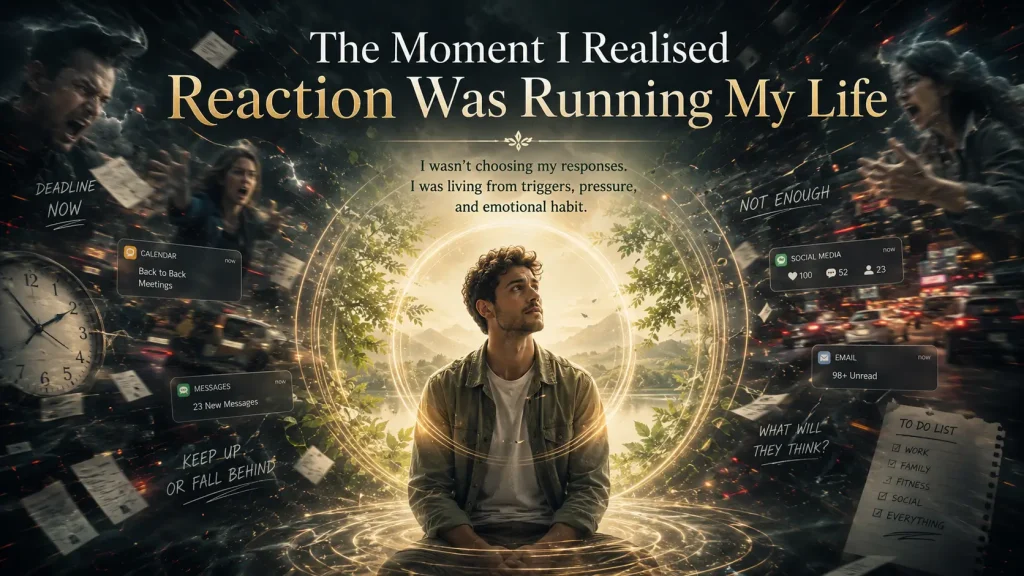
But for the first time, I realised there is a difference between reacting and responding.
Reaction is immediate.
Automatic.
Emotional.
Conditioned.
Response contains awareness.
A response includes a pause.
A breath.
A moment where we ask ourselves:
“Is this the right time?”
“Can I genuinely give this my attention?”
“Would another time serve both people better?”
What I began to understand was that many of us spend our lives reacting.
We react to requests.
To emotions.
To pressure.
To guilt.
To urgency.
And eventually, we lose connection with our own direction.
The Centre Method is not about becoming selfish or disconnected from others.
It is about learning to return to centre before making decisions.
Because from centre, we can still choose kindness.
We can still help people.
But we do so consciously rather than automatically.
Sometimes the most balanced response is:
“Yes, I can help.”
And sometimes the wisest response is:
“I’d love to help — but let’s arrange a better time.”
That small pause can change the entire direction of a day, a relationship, or even a life.
For me, that morning at the workshop became more than a distraction.
It became a lesson.
A lesson that awareness often begins in the smallest moments.
And sometimes growth starts the instant we notice:
reaction has been driving the vehicle for far too long.